

Israel's election and AI: what the labelling rules cover, and what they don't
Israel's Central Elections Committee now requires AI-generated campaign material to carry a label. Experts quoted by The Times of Israel say the bigger risk is the chatbot answers voters trust. Here is what the rules cover.
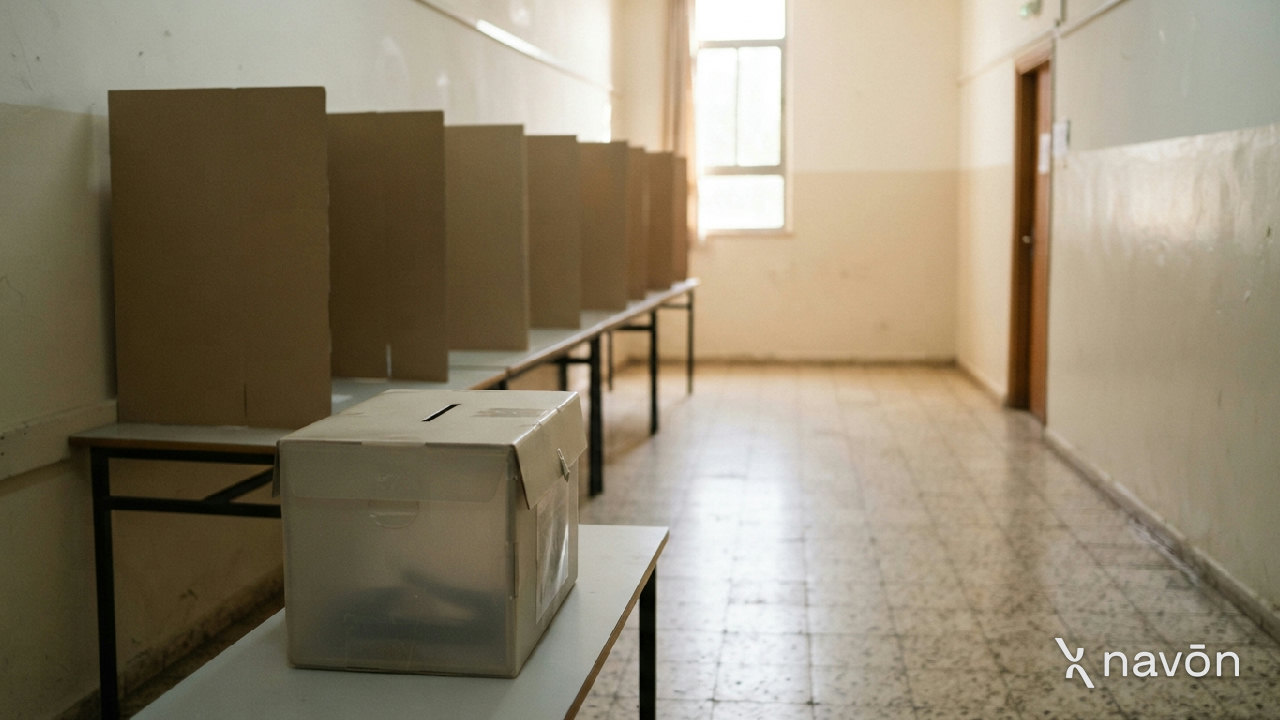
Israelis vote for the 26th Knesset on Tuesday, October 27. It is the first national election in Israel held under rules written specifically for campaign material made with artificial intelligence. This article is about those rules and the technology, not about any party or candidate.
What the rules require
On July 26, the Central Elections Committee, chaired by Supreme Court Deputy President Noam Sohlberg, issued disclosure rules under an amendment to the Elections (Propaganda Methods) Law, according to a summary by the law firm Pearl Cohen. Campaign material that is a deepfake must carry a notice.
- The notice can be a sentence saying the content, or part of it, was created or materially altered by digital means, or one of two standard symbols: one for content made entirely or mostly digitally, one for content materially altered.
- It must be prominent, high-contrast, legible and in the same language as the content.
- On video it must stay on screen for the whole clip. Audio-only material must say it out loud at the beginning and the end.
What the committee can and can't do
In an interview with The Jerusalem Post on October 2, the committee's acting director general, Dean Livne, explained that the vote itself is on paper. Ballots are counted by hand at each polling station, the count is signed and filmed, and only then entered into central systems that the article says are not connected to the internet. The committee also publishes images of the handwritten protocols so the public can compare them with the official results.
What voters see before they reach the ballot box is harder. The Post reports that the committee cannot verify whether a given recording is real. It can work with the major platforms to seek removal of false material, and issue public warnings with security agencies. Livne's advice to voters was blunt: whatever you see online or on WhatsApp, doubt whether it is true.
The gap experts point to
A Times of Israel report on October 19 argues that the bigger risk is not the fake video but the chatbot. It cites an Israel Internet Association survey finding that 88% of Israeli adults use ChatGPT and 73% use Gemini. Chatbots turn whatever they retrieve into a confident answer, and the rules on labelling campaign material do not cover them.
Shay Hershkovitz, a Georgetown adjunct quoted in the piece, put it this way: "It's not the fake video you see, it's the AI system you trust." Tehilla Shwartz Altshuler of the Israel Democracy Institute warned that people trust their own ability to spot fakes more than is justified.
How to check what you see
- Look for the label. Official campaign material made with AI is supposed to carry one, but material from anonymous accounts will not.
- Be most careful with anything that arrives late and asks you to act: a claim that a polling station is closed, that a vote has been cancelled, or that someone has withdrawn. Check it with the Central Elections Committee or a known news outlet.
- Treat a chatbot's answer about current events as a starting point. Ask for its sources and open them.
- Talk to children and teenagers about it. A forwarded clip in a class group spreads faster than any correction.
What it means for Navōn
These articles take no side in politics. When Navōn searches the web to answer a question, it shows the sources it used so they can be checked, and that habit is worth keeping with any AI tool this week: an answer is only as reliable as the reporting behind it. Our guide on teaching students to check AI output has more on building that habit.
Common questions
When is Israel's 2026 election?
Israel's election for the 26th Knesset is on Tuesday, October 27, 2026.
Do AI campaign ads have to be labelled in Israel?
Yes. Rules issued by the Central Elections Committee on July 26, 2026 require campaign deepfakes to carry a prominent notice or a standard symbol, on screen for the whole of a video and spoken at the start and end of audio.
Can the Central Elections Committee remove a deepfake?
It cannot verify every recording, but The Jerusalem Post reports it can work with major platforms to seek removal of false material and issue public warnings.
How can I tell if an election video is AI-generated?
Check for the required label, be wary of late claims that ask you to act, and confirm anything important with the Central Elections Committee or an established news outlet before sharing it.
Sources
- The Jerusalem Post: Israel's election faces AI, deepfakes and disinformation - but not online voting (October 2, 2026)
- The Times of Israel: 'You can spot the fake image, but not the poisoned info' (October 19, 2026)
- Pearl Cohen: Israel issues deepfake disclosure rules for election campaign publications (July 30, 2026)
This story was researched and written by Navōn.
Inside Navōn, News writes an article on any topic from sources you choose, checked against your family's or school's standards.
Published by Navōn. How these guides are written and checked.
Read next
- Teaching students to check what AI tells them
AI states wrong things fluently. Verification is the one AI skill that transfers to every tool a student will ever use — here is how to teach it.
- Talking to your child about AI
What to say at different ages, the questions children actually ask, and why the goal is being the person they tell rather than the person who checks.
- What is a language model? An explainer without the jargon
How AI chatbots actually work, explained for parents and educators — and why understanding the mechanism tells you exactly where to distrust it.