

Jewish Futures conference asks how AI will change Jewish education
Today in New York, educators gather for Jewish Futures 2026 to ask how artificial intelligence should change the educator's role, and what in Jewish education should not change at all.
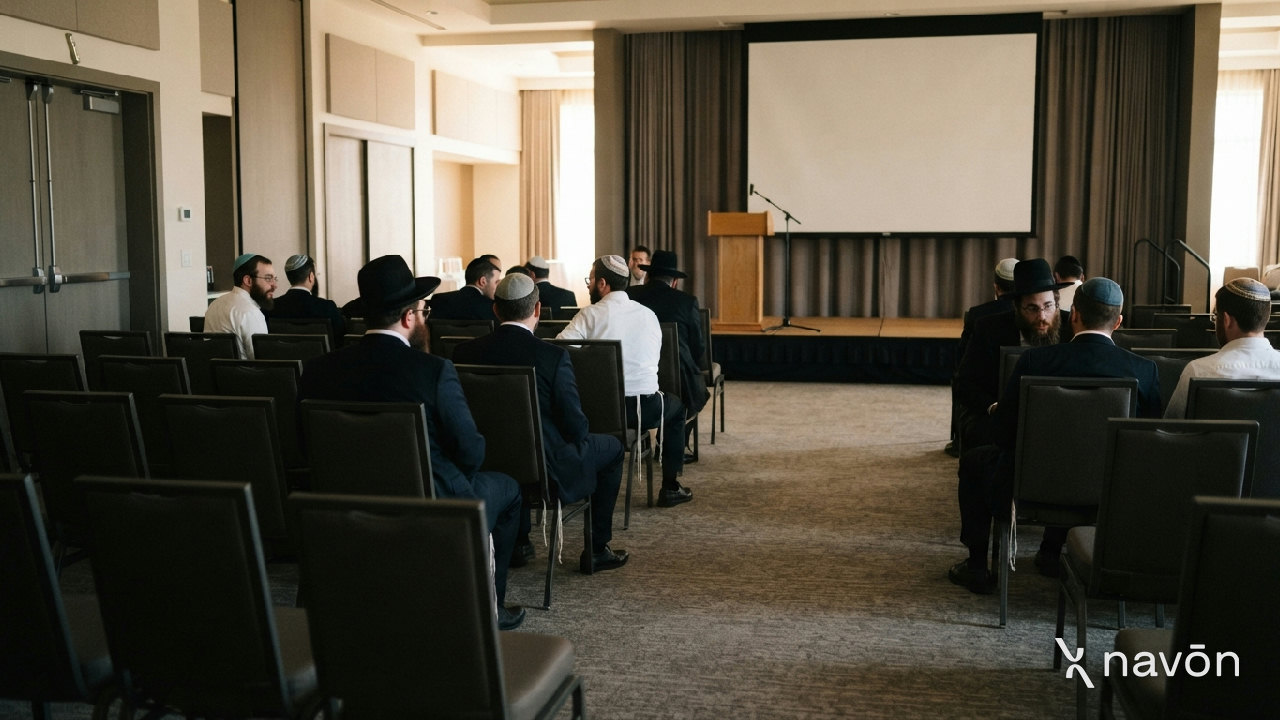
The Jewish Education Project is holding its Jewish Futures 2026 conference today, Monday, October 26, at Temple Emanu-El in New York City. The Jerusalem Post and a Jewish Education Project release carried by JNS both described the event, which is built around a single question: what happens to Jewish education when artificial intelligence changes how young people learn.
What was reported
- The conference is titled "Becoming Tomorrow's Educators" and runs from 12:30 pm to 8:30 pm Eastern, according to the organization's educator portal.
- Organizers say AI and other technologies are rapidly transforming how young people learn and understand the world, and that the event will address how educators' roles should change.
- They also say it will consider what is so essential about Jewish education that it should endure whatever technological or social change comes.
- The main interactive activity is called Tzomet Games, in which participants work in teams on possible scenarios for Jewish life in 2050.
- The keynote is scheduled to be given by Sam Glassenberg, a technology entrepreneur whose career has spanned video games, artificial intelligence, neuroscience and medicine.
The Jewish Education Project's educator portal also lists an AI for Educators learning series, which suggests the organization has been treating the subject as an ongoing training need and not a single event.
Why it matters
Most public discussion of AI in schools asks whether students will cheat. The framing here is different, and more useful. It asks what a teacher is for once information and first drafts are cheap, and which parts of Jewish education cannot be handed to a machine: the relationship between a rebbe and a talmid, the example of a teacher's own conduct, the experience of learning in a community. Those are questions that schools can start answering before any tool is chosen.
The scenario exercise is worth noticing as a method. Planning for 2050 is guesswork, but asking teams to argue through several possible futures is a way of finding the commitments that stay fixed in all of them.
What it means for families, schools and professionals
- Schools can use the same question internally: before adopting any tool, write down what the school will not delegate.
- Parents can ask their child's school whether it has a position on AI and who decides it.
- Mechanchim looking for training can see from the portal that structured AI learning series for Jewish educators already exist.
- Nothing in the coverage tells schools which tools to use. The conference is about direction, not a product.
For a community that has long thought carefully about which technologies belong in a child's life, the timing is unsurprising. Questions about AI in a beis medrash, a day school classroom or a seminary come up in different forms in each setting, and a gathering of educators is one place where they can be compared. The coverage does not report any decisions or recommendations from the conference, and none should be assumed.
If you are a parent or a teacher who cannot attend, the practical takeaway does not need a ticket. Ask what your school's position is, who made it, and when it will next be reviewed. A position written down and revisited is worth more than a tool chosen quickly.
What it does and doesn't change for Navōn
The conference does not change how Navōn works, and Navōn has no part in it. It does underline a point we make in our guides for schools: the policy comes first, the tool second. Navōn lets a school set its own standards, but it never pasken, and a question of halacha belongs with a rav. Our guide to rolling out AI in a school covers the practical steps.
Common questions
What is the Jewish Futures conference?
It is an annual gathering run by the Jewish Education Project. The 2026 edition, "Becoming Tomorrow's Educators," takes place October 26 in New York City and focuses on AI and the role of the Jewish educator.
Where is Jewish Futures 2026 held?
Organizers list Temple Emanu-El in New York City.
Is there training on AI for Jewish educators?
The Jewish Education Project's educator portal lists an AI for Educators learning series.
Should Jewish schools allow AI?
That is for each school and its rabbinic and lay leadership to decide. Our guide on whether schools should allow AI sets out the questions to settle first.
Sources
- The Jerusalem Post: Jewish Futures conference explores how technology will shape Jewish education (October 2026)
- JNS (The Jewish Education Project): Jewish Futures to explore how AI and a changing world could reshape Jewish education (October 2026)
- The Jewish Education Project: Professional Development listing, Jewish Educator Portal
This story was researched and written by Navōn.
Inside Navōn, News writes an article on any topic from sources you choose, checked against your family's or school's standards.
Published by Navōn. How these guides are written and checked.
Read next
- Kosher AI: what it means and how to evaluate it
A complete guide to what people mean by kosher AI, why no certification exists, and the specific properties to check before a tool enters your home or classroom.
- AI in yeshivas and Jewish day schools
The questions a menahel actually faces about AI — kedushah standards, bittul zman, secular content, and what a school can realistically control.
- Rolling out AI in your school, week by week
A twelve-week plan from decision to school-wide use, with what to do at each stage and the mistakes that make a rollout fail.